Skin Health

1. Definition and Function of the Skin
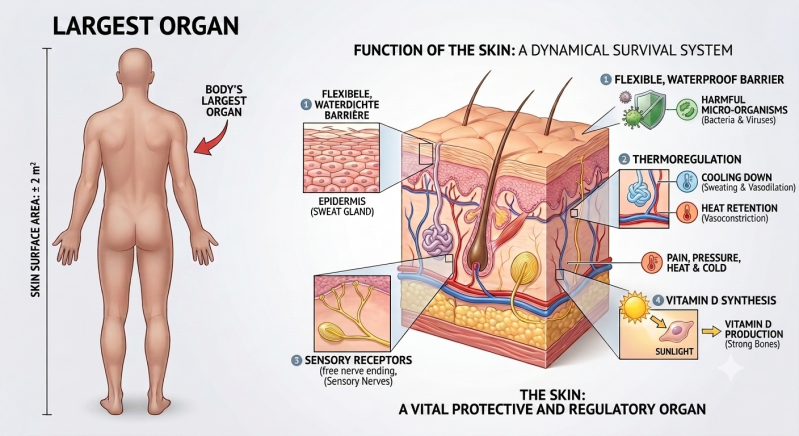
The skin is the largest organ of the human body. It forms a flexible, waterproof covering that protects us from the outside world. Without this ingenious protective layer, we would be vulnerable to harmful microorganisms such as bacteria and viruses. The skin functions as a vital barrier that keeps infections out.
The skin is also essential for thermoregulation, which simply means that it keeps our body temperature stable. When you are warm, the blood vessels widen and you begin to sweat to cool down, while the opposite happens in cold conditions to retain heat. Thanks to millions of sensory receptors, or nerve endings, the skin allows us to detect pain, pressure, heat, and cold, which immediately alerts us to potential danger. Finally, this active organ plays a crucial role in the synthesis of vitamin D. This is the medical term for the production of this important nutrient under the influence of sunlight, which is indispensable for strong bones. In short, the skin is far more than an outer shell; it is a dynamic survival system.
Sources:
Anatomy, Skin (Integument) - StatPearls - NCBI Bookshelf
The Vitamin D Receptor: A Tumor Suppressor in Skin - PMC
2. Influence of Superfoods on the Skin
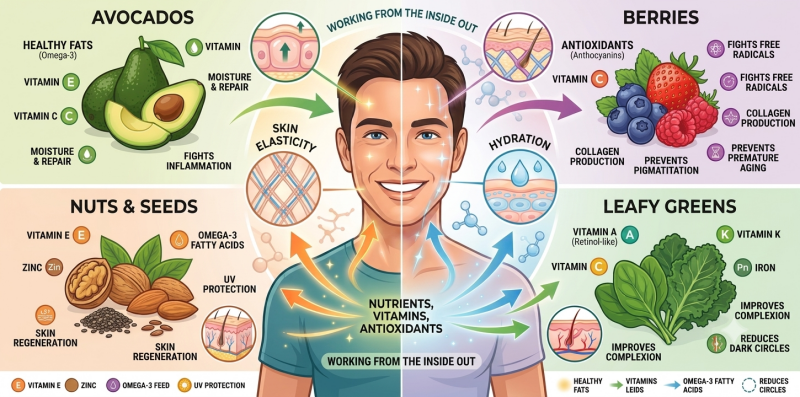
What we eat has a direct impact on our appearance, and so‑called superfoods can strongly support the biological processes within the skin. Many of these foods are rich in antioxidants. This is a medical umbrella term for substances that neutralize harmful free radicals, which are aggressive molecules that damage cells through oxidative stress. By slowing this process, superfoods help prevent premature skin aging and support healthy cell structure.
Certain vitamins and minerals in these foods also stimulate collagen synthesis, which simply means the natural production of collagen. Collagen is a crucial structural protein that provides firmness and elasticity to the skin. Many superfoods also contain essential fatty acids that strengthen the lipid barrier. This is the skin’s natural fatty layer that prevents moisture loss and protects against dryness.
By nourishing this barrier, superfoods improve overall hydration and skin texture. In essence, the right nutrition offers active protection from within and helps the tissue function at its best.
Sources:
Full article: Discovering the link between nutrition and skin aging
3. Complaints, Causes, and Supportive Remedies
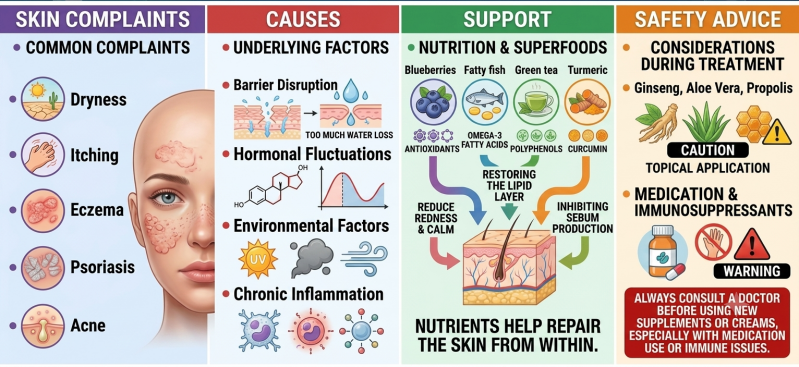
Common skin complaints range from bothersome dryness and itching to chronic and painful conditions such as eczema, psoriasis, and acne. The underlying causes often involve a disrupted barrier function, hormonal fluctuations, environmental factors, or acute inflammatory reactions deep within the body. When these issues persist, the physical and mental consequences can extend far beyond mild irritation. Chronic inflammation, the medical term for long‑lasting, silent inflammation at the cellular level that gradually damages tissue, can structurally impair healthy skin. This not only contributes to premature aging but can also lead to stubborn scarring and pigmentation that significantly hinder the skin’s ability to repair itself.
Awareness plays a crucial role in preventing and successfully managing these persistent problems. In practice, increased awareness simply means paying genuine attention to daily habits, such as maintaining a healthy sleep rhythm, reducing stress, using gentle skincare, and monitoring daily nutrition. Knowledge about nutrition is essential for overall vitality, since the skin reflects the condition of the gut and responds directly to the fuel and building blocks the body receives. By making conscious choices, early symptoms are recognized more quickly and inflammatory reactions are no longer fed unconsciously, giving the skin the opportunity to function optimally and preventing complaints proactively.
Superfoods offer powerful, natural support by promoting the skin’s natural recovery, nourishing cells, and strengthening a weakened skin barrier. Blueberries, blackberries, and pure cacao are exceptionally rich in specific antioxidants that effectively reduce oxidative stress. This is the medical term for an excess of aggressive molecules that attack healthy cells and break down tissue. By neutralizing this stress, irritated skin calms and redness decreases significantly. Fatty fish, walnuts, and plant‑based alternatives such as chia seeds and flaxseeds help restore the lipid layer. This is the medical term for the natural fatty barrier that protects the skin from excessive moisture loss and harmful microorganisms.
Superfoods such as green tea and turmeric also help regulate sebum production. Sebum is the biological secretion of skin oils that, when overproduced, clogs pores, stimulates bacterial growth, and contributes to acne. Through this broad internal support, existing complaints decrease noticeably. The skin becomes more elastic, retains moisture more effectively, and is better equipped to handle daily influences, which directly contributes to a healthy, vibrant, and radiant appearance.
Our nutrition strengthens the skin from within. In addition, there are of course nourishing creams that care for the skin from the outside. A skincare cream based on ginseng, aloe vera, and propolis deeply nourishes the skin and supports its natural ability to repair itself. Ginseng is known for its stimulating effect on circulation and cellular metabolism. Because ginseng can slightly activate the immune system, there is theoretically a small chance of interaction in people who use immunosuppressants, although this risk remains very low with topical application since absorption through the skin is limited. The text explains that superfoods with immune‑stimulating properties may counteract the effect of immunosuppressive medication, which illustrates why caution is sometimes necessary.
Aloe vera is primarily hydrating and soothing. It forms a protective layer without affecting the absorption or breakdown of medication. Unlike fiber‑rich superfoods that can slow the absorption of medications, as described in the text, topical aloe vera has no effect on blood medication levels.
Propolis has antibacterial and restorative properties. Only individuals with an allergy to bee products or those using strong immunosuppressants should exercise extra caution, as propolis may locally enhance an immune response. For most users, creams containing these ingredients are safe to combine with medication, although consulting a physician remains advisable for chronic skin conditions.
Sources:
Phytotherapy Research | Medicinal Chemistry Journal | Wiley Online Library
4. Recommendations and Responsible Use
Anyone experiencing persistent, painful, or acute skin complaints should always consult a physician for an accurate diagnosis. Although nature provides powerful building blocks that support overall well‑being, each individual responds differently to concentrated nutrients. This depends entirely on personal health status, underlying genetic conditions, and the body’s overall metabolic efficiency, which refers to how effectively the body processes and utilizes nutrients. Superfoods may offer vital and sometimes even therapeutic benefits, yet this does not reflect the current health condition of a patient. Only a treating physician or specialist can determine whether risks exist, because only they can assess how the body responds to both nutrition and medication.
People who already use specific medication for skin conditions should consult their physician to discuss the formulation, ingredients, and the particular product, in this case the superfoods in question. A superfood may be exceptionally pure and healthy on its own, but it can still create a dangerous interaction with conventional medication. This occurs when certain active biological components in these foods unpredictably weaken, intensify, or disrupt the absorption of medications through the intestinal wall and into the bloodstream.
A well‑known and high‑risk example of such an interaction is the combination of vitamin K‑rich superfoods, such as kale, spinach, broccoli, and spirulina, with blood‑thinning medication. Although these green superfoods normally support healthy circulation in the skin, vitamin K activates the body’s blood‑clotting process. This directly counteracts the therapeutic effect of prescribed blood thinners and may lead to thrombosis, the medical term for a blood clot that can dangerously obstruct a vital blood vessel. Grapefruit, a popular superfood due to its high vitamin content, is also widely recognized in the medical field for its strong interaction with pharmaceutical drugs. Grapefruit actively inhibits the function of specific enzymes in the liver. These enzymes are functional proteins responsible for the metabolism of medications, meaning the biological breakdown and processing of drugs in the body. When this breakdown is slowed by compounds in grapefruit, the concentration of the medication in the blood can rise rapidly to a toxic level, the medical term for a harmful and dangerous amount. This may cause severe acute skin reactions, blistering, or permanent liver damage.
Superfoods that strongly stimulate the immune system, such as turmeric, ginger, and certain medicinal mushrooms like reishi, can also interact with immunosuppressants. Immunosuppressants are medications that intentionally suppress the natural immune response and are often prescribed by dermatologists for severe autoimmune skin diseases such as psoriasis and lupus. Because these superfoods enhance immunomodulation, the biological process through which the immune system is regulated and strengthened, they can directly counteract and neutralize the effect of immunosuppressive medication. As a result, the underlying skin inflammation may flare up again with full intensity, leading to painful and persistent symptoms.
It is also important to consider the influence of fiber‑rich superfoods such as chia seeds, hemp seeds, and psyllium when taken together with oral medication for skin infections, including antibiotics. These fibers form a thick gel in the stomach that can slow absorption. Absorption is the medical term for the uptake of nutrients or medications through the intestinal wall into the bloodstream. When this process is delayed, the medication may never reach the therapeutic level needed to effectively eliminate bacteria. Superfoods high in tannins, such as certain concentrated herbal teas and pomegranate juice, can also bind to the active molecules of medications, rendering them inactive and causing them to pass through the body unchanged. This highlights why open communication with a medical specialist about daily dietary habits is essential for every patient undergoing treatment.
For those who currently have no complaints and enjoy healthy skin, the positive recommendation is to remain active, move consciously, and fully enjoy daily life. Within a balanced and healthy routine, superfoods can effectively support the skin’s daily functioning, protect cells, and maintain strong natural barriers, allowing the body to operate with energy and vitality. Anyone seeking deeper insight into the superfoods mentioned in this text can find a detailed description in the catalog, where all products are thoroughly explained.
Sources:
medsafe.govt.nz/profs/PUArticles/September2024/Medicines-and-food-interacting-combinations.html
Food and Supplement Interactions with Warfarin | UC San Diego Health